

Practice area
Intellectual Property
Protecting trademarks, inventions, and creative work
Intellectual property is often a company's most valuable asset. Registering and protecting trademarks, patents, and copyrights gives you a clearer basis to use and defend that work.
Our IP practice supports startups, creators, and businesses through registration, licensing, and enforcement, explaining the process and timelines involved at each stage.
Suggested: Initial Legal Consultation · 20 minutes
Is this your situation?
- You want to register a brand name or logo before launch.
- Your trademark application has received an objection or opposition.
- Someone is using a mark or content similar to yours.
- You want to license or assign the rights in your work.
Scope
Areas we advise on
- Trademark search, registration, and renewal
- Patent filing and prosecution support
- Copyright registration and licensing
- IP enforcement and infringement matters
- Technology transfer and licensing agreements
- IP strategy for startups and founders
Trademarks
A trademark protects the brand identifiers that distinguish your goods or services. Registration in the appropriate class gives you a recorded basis for use and enforcement.
We assist with availability searches, classification, filing, responding to examination reports, and renewals.
Patents
A patent protects a novel, non-obvious, and useful invention. The filing process involves drafting specifications and claims, and responding to examination over time.
We support inventors and companies through the filing and prosecution process and explain what protection a patent can and cannot provide.
Copyright and enforcement
Copyright protects original literary, artistic, musical, and software works. Registration is not mandatory but provides useful evidence of ownership.
Where infringement arises, we advise on the options for enforcement, including notices and proceedings before the appropriate forum.
How it works
From first contact to a clear plan
Step 1: Share the facts
Tell us briefly what has happened, by booking directly or through the enquiry form. Keep confidential details and documents until the firm asks for them.
Step 2: Initial Legal Consultation
20 minutes. Understand your issue, broad legal options, and next-step direction.
Step 3: Decide how to proceed
If you choose to go ahead and the firm accepts the matter, the scope and fee are agreed before any further work begins.
Who you will work with
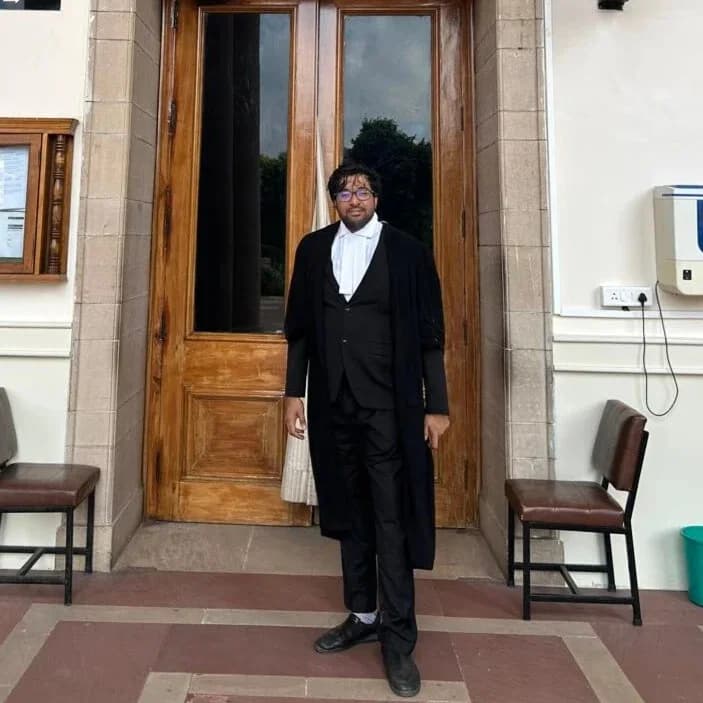
Advait Ghosh
Founding & Managing Partner
- In practice since
- 2018
- Appears before
- Supreme Court of India, High Court of Delhi
FAQ
Intellectual Property questions, answered
How long does trademark registration take in India?
The timeline depends on whether the application faces objections at examination or opposition after publication. A straightforward application moves through filing, examination, publication, and registration, while objections or oppositions extend the process. A registered trademark is then renewable periodically.
What is the difference between a trademark, a patent, and a copyright?
A trademark protects brand identifiers such as a name or logo, a patent protects a new and inventive technical solution, and copyright protects original creative works such as writing, art, music, or software. Some assets may involve more than one form of protection.
Do I need to register copyright in India if it is automatic?
Copyright generally arises automatically when an original work is created, so registration is not mandatory. Registration still provides useful evidence of ownership and the date of the work, which can help if ownership is ever questioned.
What can be patented in India?
Broadly, an invention must be new, involve an inventive step, and be capable of industrial application, and it must not fall within categories the law excludes. Assessing patentability and prior art early helps set realistic expectations before filing.
Should a startup protect its IP before launch?
Founders often consider IP strategy before a public launch, because public disclosure of an invention can affect patent novelty, and early trademark clearance reduces the risk of a brand conflict later. The right steps depend on the business and its assets.
Have a question about intellectual property?
The initial legal consultation (20 minutes) is the usual place to start. It covers your position and the broad options, so you can decide what to do next.
Or call +91-8810472098