

Practice area
Administrative & Constitutional Law
Writ remedies, service matters, and the limits of public power
Decisions by government departments, public bodies, and universities are bound by the statutes that create their powers and by the Constitution. When an authority acts outside those limits, or without a fair procedure, the law provides remedies, most often through a writ petition before the High Court.
Our administrative and constitutional practice advises individuals and institutions on writ proceedings, service and employment disputes with public employers, and education-sector matters, before the Delhi High Court and other forums.
Suggested: Case Strategy Session · 45 minutes
Is this your situation?
- You have been suspended and the inquiry has not concluded.
- You have received a charge memorandum or a show-cause notice.
- A public authority or university has passed an order it may have had no power to make.
- You want to challenge a decision on an appointment, promotion, or eligibility.
Scope
Areas we advise on
- Writ petitions under Articles 226 and 227
- Challenges to arbitrary administrative action
- Service and employment disputes with public employers
- Suspensions, disciplinary inquiries, and penalties
- University and education-sector governance
- Intra-court appeals and further appeals
Writ jurisdiction and administrative action
Article 226 allows a High Court to examine whether a public authority acted within its powers, followed the procedure the law requires, and acted fairly and reasonably. The choice of writ, the relief sought, and the timing of a petition all depend on the decision under challenge and the governing law.
We advise on whether a decision is open to challenge, whether an alternative remedy should be used first, and what a petition needs to establish.
Service & employment disputes
Service matters with public employers often turn on the applicable service rules: who may suspend or discipline an employee, the procedure an inquiry must follow, and the time within which it should conclude.
We advise employees and employers on suspensions, charge memoranda, inquiries, penalties, and the representations and proceedings available at each stage.
Education sector & university governance
Universities act through officers and authorities whose powers are defined by their Acts, Statutes, and Ordinances. Disputes about appointments, suspensions, and removals frequently depend on whether the right authority acted under the right provision.
We advise faculty, officers, and institutions on questions of statutory competence, procedure, and the remedies available when a university decision is challenged.
How it works
From first contact to a clear plan
Step 1: Share the facts
Tell us briefly what has happened, by booking directly or through the enquiry form. Keep confidential details and documents until the firm asks for them.
Step 2: Case Strategy Session
45 minutes. A legal route map for serious matters: facts, claims, risks, jurisdiction, evidence, timeline, and next steps.
Step 3: Decide how to proceed
If you choose to go ahead and the firm accepts the matter, the scope and fee are agreed before any further work begins.
Who you will work with
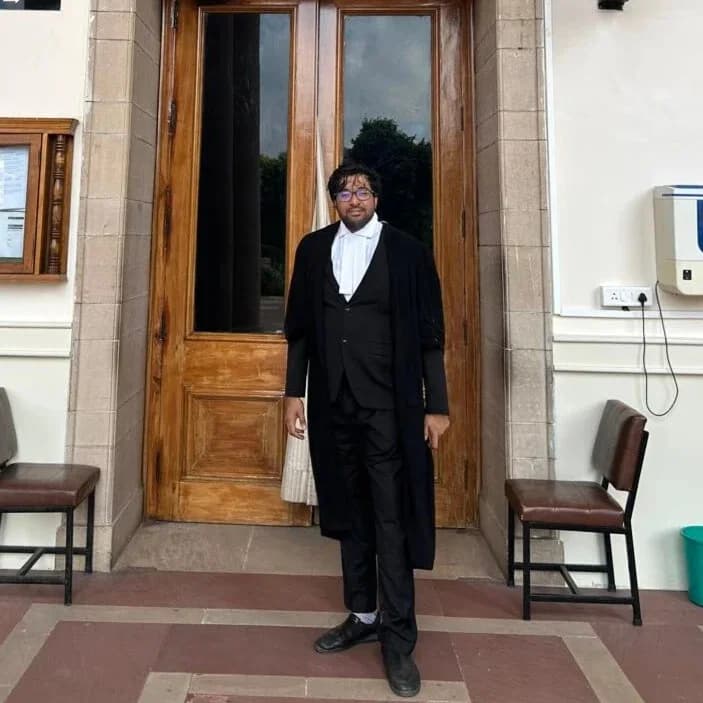
Advait Ghosh
Founding & Managing Partner
- In practice since
- 2018
- Appears before
- Supreme Court of India, High Court of Delhi
FAQ
Administrative Law questions, answered
What is a writ petition under Article 226?
A writ petition asks a High Court to review the action of a public authority, or of a body performing a public function, and to issue directions, orders, or writs such as certiorari or mandamus. It is used where an authority has acted without power, arbitrarily, or without a fair procedure.
Can a university's decision be challenged in the High Court?
Universities established by statute are generally amenable to writ jurisdiction, and their decisions can be examined for lack of authority, procedural irregularity, or arbitrariness. The starting point is usually the university's own Act, Statutes, and Ordinances, which define who may take a decision and how.
Is suspension pending inquiry a punishment?
No. Suspension pending inquiry is an interim measure, not a penalty. It should still be ordered by the competent authority for good reason, and courts discourage suspensions that continue indefinitely without charges being served or the inquiry progressing.
Must other remedies be used before filing a writ petition?
Often, but not always. Where an effective statutory remedy exists, the High Court may expect it to be used first. That is not an absolute bar, particularly where the action is without jurisdiction, violates natural justice, or affects a fundamental right.
Knowledge Hub
Read before you book
- InsightDelhi High Court on the Suspension of a Former University Vice-Chancellor8 min read
- GuideChallenging Administrative Action: A Guide to Article 2266 min read
- GuideSuspensions and Disciplinary Inquiries in India: How It Works5 min read
- GuideUniversity Governance: The Legal Framework4 min read
- Court updateDelhi High Court Records Revocation of Former Jamia Millia Islamia VC's SuspensionOrder of 21 January 2026
Have a question about administrative law?
The case strategy session (45 minutes) is the usual place to start. It covers your position and the broad options, so you can decide what to do next.
Or call +91-8810472098